
The City Behind the Olympic Welcome
The Boys in the BoatThis thread follows the violence and persecution concealed from the visiting American rowers during their stay in Germany.
increasing Bearing strength in each event
 decreasing
Bearing strength in each eventdecreasingA Town's Hidden Wounds

Violence in Köpenick
Attack
During the Köpenicker Blutwoche, Nazi storm troopers arrest and torture Jews, Social Democrats, and Catholics. Some victims are murdered, and the violence reaches the town’s waterways.
Contrast
Three years later, visiting American athletes experience the area as quaint and peaceful. The difference between remembered violence and staged calm underscores how much the Olympic setting will conceal.
Rights Stripped by Law

The Nuremberg Laws
Exclusion
The Reich Citizenship Law strips German Jews of citizenship, while the Law for the Protection of German Blood and German Honor prohibits marriages and relationships across racial categories.
Everyday Consequences
The laws formalize exclusion already visible in public life, work, and sport. Jewish rowing clubs and mixed clubs face closure or forced removal of Jewish members.
People Removed from Sight
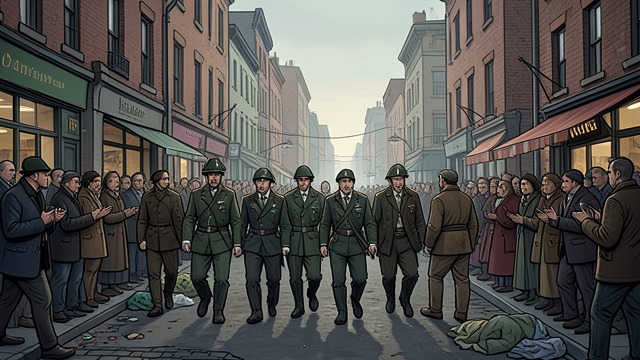
Clearing the Streets
Roundup
Roma and Sinti families are arrested and transferred to a detention camp near Berlin before foreign visitors arrive. Homeless people are also removed from public view.
Image Management
The removals make the Olympic city appear orderly without changing the violence that produced it. Visitors see prepared streets, not the people the regime has made disappear from them.
A Pleasant Walk in Köpenick

The Visitors' View
Discovery
Joe Rantz walks through Köpenick’s cobbled streets, passing shops, a synagogue, and a castle. The town appears peaceful and familiar, and the coming race seems to be his most immediate concern.
Blind Spot
The rowers do not know the history of local torture or the persecution unfolding around them. Their limited view is shaped by both the regime’s concealment and the timing of their visit.
A Future Hidden in the Present
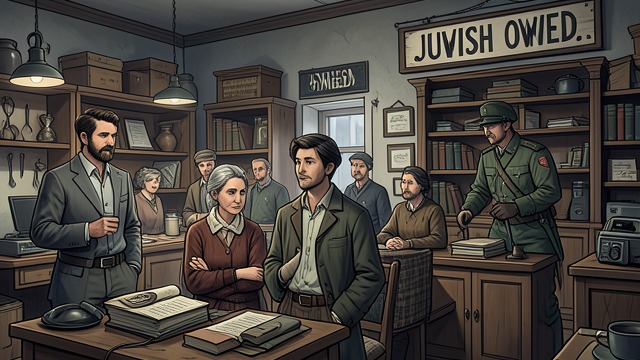
The Hirschhahn Family
Daily Life
The rowers pass a Jewish family’s clothing shop and might have glimpsed its owners at work. The family still hopes that service in the Great War will protect them from future danger.
Later Fate
The family’s persecution, deportation, and deaths lie beyond the visitors’ knowledge. Their ordinary lives show what the Olympic spectacle excludes from its reassuring story.
June 1933
September 1935
Early August 1936
Late July 1936
August 1936, before the final
